

Knowledge center
Expert pest control knowledge and overview, frequently asked questions and answers, prevention tips and compliance insights.
Learn how iRotec solves pest problems fast, safely and professionally.
Pest control
overview
Mouse

The house mouse (Mus musculus) is one of the most common indoor pests. It is frequently encountered in older buildings, but also in restaurants, warehouses, offices, and residential properties, where warmth, shelter, and food are available.
Adult house mice are typically 7–10 cm long (excluding the tail) and have large ears, a pointed snout, and a short coat that ranges from grey to brown. Because mice are mostly active at night, they are often present long before they are actually seen.
Early signs of mice:
- Mouse droppings – usually around 5 × 2 mm, dark and rice‑shaped
- Scratching or rustling sounds, especially at night
- Gnaw marks on food packaging, cables, or furniture
- A musty smell caused by urine and nesting materials
Why must early signs of mice be treated seriously?
Mice reproduce extremely quickly. They become sexually mature within just a few weeks after birth. A single female mouse can produce 5–10 litters per year, with 3–14 young per litter, and a gestation period of only about 19 days. This means a small issue can quickly develop into a large mouse infestation if left untreated. Having mice does not mean your home or business is dirty. Mice are opportunistic: if they find a way in and access to food or shelter, they will take it.
Prevention is often the most effective and cost‑efficient way to stay in control and avoid a serious infestation. We recommend the following prevention measures against mouse:
- Seal small gaps, cracks, and openings in walls, floors, and around pipes
- Store food in sealed containers, both at home and in businesses
- Keep spaces clean and organized to reduce food remnants
- Remove clutter that could provide nesting opportunities
- Pay attention to basements, kitchens, storage areas, and loading zones
Common risks:
- Mice pose risks to health, safety, and property, especially in food‑related or regulated environments.
- Health & hygiene risks
- Transmission of diseases via viruses, bacteria, and parasites, including hantavirus, leptospirosis, lymphocytic choriomeningitis (LCM), typhus, etc.
- Contamination of food, raw materials, and surfaces through droppings, urine, and hair
- Property & business risks such as damage to cables, insulation, packaging, and goods due to gnawing, ire hazards caused by damaged electrical wiring, unpleasant odours, reputation damage for businesses, fines or enforcement actions related to inspections and government control.
If you have seen one mouse, there is almost always more. Early professional mouse control is key to preventing further spread and damage. Reach out to iRotec for a professional inspection and tailored mouse control solution. We focus on identifying the root cause, applying effective treatment, and preventing the problem from returning — quickly, safely, and predictably.
Rat

In the Netherlands, two types of rats are commonly found: the Brown Rat (Rattus norvegicus) and the Black Rat (Rattus rattus). The Brown Rat is by far the most widespread species, while the Black Rat is less common and mainly found in southern provinces and port areas.
The Brown Rat is typically found in lower‑lying areas such as basements, sewers, gardens, warehouses, and around buildings. It is recognized by its larger, stockier body and a relatively short tail. The Black Rat has a slimmer build, a longer tail, and darker colouring. It prefers higher locations and is often found in barns, attics, roof spaces, and upper floors of buildings. Because rats are cautious and mostly active at night, they are often present long before they are actually seen.
Early signs of rats:
- Rat droppings, larger than mouse droppings and often spindle‑shaped
- Scratching, gnawing, or movement sounds, especially at night
- Gnaw marks on cables, wood, packaging, or pipes
- Burrows or holes near foundations, gardens, or waste areas
- Strong ammonia‑like odour caused by urine and nesting materials
Why must early signs of rats be treated seriously?
Rats reproduce extremely quickly. They become sexually mature at 5–8 weeks of age and can produce large litters of up to 20 young. Female rats are capable of becoming pregnant again within 24 hours after giving birth, which means populations can grow rapidly if not controlled. In extreme cases, this can result in hundreds of offspring per year from a single breeding pair. Just as with mice, having rats does not mean your home or business is unhygienic. Rats are opportunistic — if they find shelter, warmth, food, and an entry point, they will take advantage of it.
Prevention is often the most effective and cost‑efficient way to stay in control and avoid a serious rat infestation. We recommend the following rat prevention measures:
- Seal gaps, cracks, and openings in walls, foundations, doors, and around pipes
- Store food and animal feed in sealed, rodent‑proof containers
- Keep waste areas clean and ensure bins are properly closed
- Reduce clutter indoors and outdoors that could provide nesting places
- Pay extra attention to basements, gardens, storage areas, loading docks, and waste zones
Common risks of rats:
- Rats pose significant risks to health, safety, property, and business continuity, especially in food‑related or regulated environments.
- Health & hygiene risks, transmission of diseases via viruses, bacteria, and parasites, including hantavirus, leptospirosis, lymphocytic choriomeningitis (LCM), salmonellosis, rat‑bite fever
- Contamination of food, raw materials, and surfaces through droppings, urine, and hair
- Property & business risks, such as damage to cables, insulation, packaging, and goods due to gnawing, fire hazards caused by damaged electrical wiring, unpleasant odours, reputation damage for businesses, fines or enforcement actions following inspections and government control
If you have seen one rat, there are almost certainly more. Early professional rat control is essential to prevent further spread, damage, and health risks.Reach out to iRotec for a professional inspection and a tailored rat control solution. We focus on identifying the root cause, applying effective treatment, and preventing the problem from returning — quickly, safely, and predictably.
Bed bug
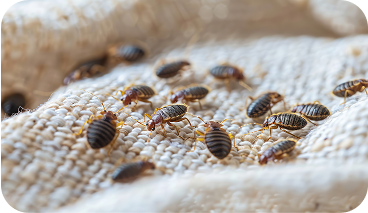
Bed bugs (Cimex lectularius) are small, blood‑feeding insects that mainly bite people and animals at night while they sleep. They are found worldwide and can occur in homes, hotels, short‑stay accommodations, offices, and other places where people rest. Bed bugs are excellent hitchhikers and are often introduced through luggage, furniture, or clothing rather than poor hygiene.
Adult bed bugs are flat, wingless, and reddish‑brown in color, ranging from 1 mm to 7 mm in size depending on their life stage and whether they have recently fed. Because they hide well in cracks and crevices, bed bugs are often present for some time before they are noticed.
Early signs of bed bugs:
- Small bites on the skin, often appearing in clusters or straight lines
- Dark spots on bedding or mattresses (bed bug droppings)
- Shed skins or live insects in mattress seams, bed frames, headboards, or furniture joints
- Blood stains on sheets or pillowcases
- Increased itching or skin irritation, especially after sleeping
Why must early signs of bed bugs be treated seriously?
Bed bugs do not reproduce as quickly as mice or rats, but they are extremely difficult to eliminate once established. They can survive several months without a blood meal, allowing them to remain hidden even when a room is unused. If early signs are ignored, a small infestation can spread to multiple rooms or neighboring properties.
Having bed bugs does not mean your home or business is unhygienic. Bed bugs are opportunistic and are often brought in unintentionally through travel, guests, second‑hand furniture, or shared spaces.
Early detection and prevention can make bed bug problems far more manageable. We recommend the following bed bug prevention measures, especially for frequent travellers:
- Inspect mattresses, bed frames, and headboards when staying overnight away from home
- Check luggage and clothing after travel before bringing them into bedrooms
- Avoid placing suitcases directly on beds or floors
- Be cautious with second‑hand furniture and inspect it thoroughly before use
- Regularly check sleeping areas for signs such as shed skins or dark spotting
Common risks of bed bugs:
Bed bugs are not known to transmit diseases to humans. However, they can still cause significant discomfort and secondary effects.
- Health & well‑being risks, such as itching and skin irritation caused by bites, allergic reactions (in some cases), sleep disturbance and fatigue, anxiety or stress related to ongoing infestations, skin infections resulting from excessive scratching. Bed bugs inject an anaesthetic and anticoagulant when they bite, which is why bites are often not felt immediately. Bite marks may only appear one to several days later and can resemble mosquito or flea bites.
- Property & practical impact, such as spread to multiple rooms or neighbouring units, disruption to daily life or business operations, reputation concerns for hospitality and accommodation providers.
If you suspect bed bugs, early professional treatment is essential to prevent the infestation from spreading and becoming more difficult to control. Reach out to iRotec for a professional inspection and an effective bed bug control solution. We focus on accurate identification, effective treatment, and preventing recurrence — quickly, discreetly, and predictably.
Bird

Birds can become a pest when they nest or gather in large numbers around buildings. In urban and industrial environments, species such as pigeons, starlings, and sparrows are most commonly involved. They are often attracted to buildings that provide shelter, ledges, warmth, and food sources, such as offices, warehouses, retail locations, and residential complexes. While birds are a natural part of the environment, persistent nesting and roosting on buildings can lead to structural damage, hygiene issues, and safety risks, particularly in business and public spaces.
Early signs of bird problems:
- Large amounts of bird droppings on roofs, ledges, walkways, or façades
- Nesting materials in gutters, roof edges, ventilation openings, or solar panels
- Blocked gutters or drainage systems
- Increased bird activity around entrances, loading areas, or rooftops
- Noise and debris caused by roosting birds
Why must early signs of birds be treated seriously?
If bird activity is not addressed early, small issues can quickly escalate. Birds often return to the same nesting or roosting locations year after year, and droppings accumulate rapidly. Over time, this can lead to costly maintenance issues, safety hazards, and compliance concerns.
Importantly, bird presence does not mean a building is poorly maintained. Birds are opportunistic and will settle wherever conditions are favourable and access is easy.
Prevention is the most effective and humane way to manage bird activity around buildings. We recommend the following bird prevention measures:
- Regularly clean and maintain areas where birds tend to gather
- Secure waste, food sources, and open containers that may attract birds
- Inspect roofs, ledges, and façades for early nesting activity
- Prevent access to preferred roosting and nesting locations
- Use animal‑friendly bird deterrent solutions tailored to the specific situation
Common risks of birds:
Birds can pose risks to health, safety, and property, especially in business and public environments.
- Health & hygiene risks, such as exposure to bacteria, fungi, and parasites present in bird droppings, increased hygiene risks in food‑related or regulated environments, accumulation of droppings on surfaces, equipment, and air intakes
- Property & safety risks, such as damage to roofs, façades, gutters, and ventilation systems, blocked drainage causing water damage, slip‑and‑fall hazards from droppings on walkways, ledges, and entrances, increased cleaning and maintenance costs.
If birds are repeatedly nesting or gathering around your building, early professional intervention helps prevent long‑term damage and ongoing disruption. Reach out to iRotec for professional advice and a tailored bird control solution. Based on your specific situation, we provide effective, compliant, and animal‑friendly deterrent measures that protect your building while respecting wildlife.
Wasp

Wasps can become a serious problem, particularly during late spring and summer, when their activity increases and they become more aggressive in search of food. In the Netherlands, common wasps and hornets are most frequently involved. They are often found around homes, gardens, terraces, hospitality areas, and workplaces, where food and sheltered nesting locations are available. Wasps typically build their nests in walls, roof spaces, eaves, sheds, attics, and other enclosed structures. When nests are located close to people, the risk of stings increases significantly.
Early signs of wasp problems:
- Frequent wasp activity around one specific area or opening
- Wasps flying in and out of small gaps in walls, roofs, or eaves
- Visible nests in roof spaces, sheds, trees, or wall cavities
- Increased wasp presence near food, drinks, bins, or outdoor seating areas
- Aggressive behaviour when people approach nesting sites
Why must early signs of wasps be treated seriously?
Wasps are highly territorial and defensive, especially when their nest is disturbed. As a nest grows, so does the number of wasps protecting it. What starts as limited activity can quickly escalate into a situation where stings become likely, particularly around entrances, workplaces, or outdoor living areas. While not everyone reacts severely, wasp stings can be dangerous, especially for children, pets, and people with allergies. Even individuals without known allergies can experience severe reactions after multiple stings.
Prevention is the safest way to reduce the risk of wasp activity around buildings. We recommend the following wasp prevention measures:
- Regularly inspect buildings early in the season for small, developing nests
- Seal gaps, cracks, and openings in walls, roofs, and eaves
- Avoid leaving food, sugary drinks, or waste uncovered outdoors
- Keep bins closed and clean, especially in summer months
- Use deterrents responsibly and avoid disturbing active nests yourself
Common risks of wasps:
Wasps pose risks to health, safety, and comfort, particularly in residential areas and public or commercial spaces.
- Health & safety risks, such as painful stings, which may cause swelling, pain, and irritation, severe allergic reactions (anaphylaxis) in sensitive individuals, increased risk of multiple stings when nests are disturbed.
- Property & operational risks, such as nests built inside walls or structures, making removal more complex, disruption to business operations, hospitality areas, or outdoor work, safety concerns for employees, customers, and visitors.
If you notice increased wasp activity or discover a nest in or around your home or workplace, professional intervention is strongly advised. Attempting to remove a nest yourself can be dangerous and often makes the situation worse. Contact iRotec for a professional inspection and safe wasp control solution. Our specialists assess the situation carefully and choose the most effective and responsible approach — protecting people, pets, and property.
Flies

Flies are common pests that can pose serious health and hygiene risks, particularly in hotels, restaurants, shops, medical facilities, warehouses, factories, and outdoor spaces. The most common problem species include house flies, fruit flies, and blowflies, all of which are attracted to food, waste, moisture, and warm environments. Because flies frequently move between waste, organic material, and food preparation areas, they can easily contaminate surfaces and products, making them a major concern in food‑related and regulated environments.
Early signs of fly problems:
- Increased numbers of flies indoors or around entrances
- Flies gathering around food preparation areas, bins, drains, or waste zones
- Small flies hovering near fruit, beverages, or organic waste
- Larvae (maggots) found in waste containers or damp organic material
- Persistent fly activity despite routine cleaning
Why must early signs of flies be treated seriously?
Flies reproduce extremely quickly. Their entire life cycle can take as little as 7–10 days, allowing populations to grow rapidly if conditions are favourable. A single female fly can lay up to 150 eggs per batch, and multiple batches can be produced within a short time. This means a minor issue can quickly escalate into a full‑scale fly infestation if left untreated. Once flies establish breeding sites, control becomes more challenging and often requires a combined approach targeting both adult flies and their breeding sources.
Prevention is the most effective way to reduce fly activity and avoid infestations. We recommend the following fly prevention measures:
- Store food in sealed containers and clean food preparation areas thoroughly
- Dispose of waste regularly and keep bins clean and closed
- Fit doors and windows with fly screens where possible
- Clean up spills, residues, and organic waste promptly
- Pay attention to drains, storage areas, and outdoor waste zones
Common risks of flies:
Flies pose risks to health, hygiene, comfort, and business reputation, especially in food‑handling and customer‑facing environments.
- Health & hygiene risks, including spreading bacteria, viruses, and parasites through contact with food and surfaces, increased risk of foodborne illnesses, contamination of raw materials, equipment, and preparation areas
- Property & business risks, such as compromised cleanliness and customer experience and non‑compliance with hygiene and food safety standards.
If you notice persistent fly activity, early professional intervention is key to preventing rapid population growth and ongoing contamination risks. Reach out to iRotec. Based on your specific situation, we recommend an effective combination of pest control services and provide clear, practical preventive measures to keep your home or business protected — now and in the future.
Cockroaches

Cockroaches are highly resilient pests that can quickly infest premises, especially in warm, humid environments. They are commonly found in restaurants, food production areas, hotels, shops, warehouses, medical facilities, and apartment buildings, where food, moisture, and shelter are available.
Cockroaches pose significant health and hygiene risks: they move between waste, drains, and food areas, spreading bacteria, viruses, and allergens through contaminated surfaces and food. Droppings, saliva, and shed skins can contribute to asthma and allergic reactions, particularly in children and sensitive individuals.
Early signs of cockroach problems:
- Live or dead cockroaches, often seen at night
- Droppings resembling small dark specks or coffee grounds
- Musty or oily odour in infested areas
- Smear marks along walls, cupboards, or floors
- Shed skins or egg cases in cracks, crevices, or hidden areas
Why must early signs of cockroaches be treated seriously?
Cockroaches reproduce rapidly and are extremely difficult to eliminate once established. Depending on the species, a single female cockroach can produce 10–40 eggs at a time and up to 500 eggs during her lifetime. Newly hatched cockroaches can become capable of reproducing within weeks, allowing populations to grow quickly if left untreated. Because cockroaches hide in small cracks and are mostly active at night, infestations are often much larger than they initially appear.
Importantly, having cockroaches does not mean your premises are unhygienic. Cockroaches are opportunistic — if they find warmth, moisture, food, and access points, they will settle in.
Prevention is the most effective way to reduce cockroach activity and avoid infestations. We recommend the following cockroach prevention measures:
- Keep areas clean and promptly remove food crumbs and spills
- Store food in tightly sealed containers
- Dispose of waste regularly and keep bins clean
- Seal cracks, crevices, and gaps around doors, walls, and windows
- Fix leaks and reduce humidity, as cockroaches are strongly attracted to moisture
Common risks of cockroaches:
Cockroaches pose risks to health, hygiene, comfort, and business reputation, particularly in food-handling and regulated environments.
- Health & hygiene risks, such as the spread of pathogens that can cause foodborne illnesses, contamination of food, utensils, and surfaces, and allergens that may trigger asthma and allergic reactions.
- Property & business risks, e.g., compromised cleanliness and customer experience, non‑compliance with hygiene and food safety standards, reputational damage, and increased inspection findings.
If you have seen one cockroach, there are almost certainly more. Because infestations are difficult to assess visually, early professional intervention is essential to prevent rapid spread and long‑term problems. Reach out to iRotec for a professional inspection. We identify the root cause, apply effective treatment, and provide clear preventive recommendations — helping keep your home or business protected.
Ants

Ants are common pests that can invade homes and businesses, especially in search of food, water, and shelter. They are frequently encountered in kitchens, storage areas, offices, hospitality environments, and residential properties. While many ant species are mainly a nuisance, others — such as carpenter ants — can cause structural damage by nesting in and weakening wood.
Ants may carry bacteria from unsanitary areas into food preparation spaces, posing hygiene and contamination risks, particularly in food‑related and customer‑facing environments. Because ant colonies are highly organized and persistent, infestations can be difficult to control without a targeted approach.
Early signs of ant problems:
- Trails of ants moving along walls, floors, or work surfaces
- Ants appearing around food, sinks, or water sources
- Small piles of debris or wood shavings near nesting sites (carpenter ants)
- Ant activity increasing during warmer periods
- Repeated ant presence despite cleaning efforts
Why must early signs of ants be treated seriously?
Ant colonies can grow quickly and often consist of thousands of individuals, supported by one or more queens. Once ants establish a nest indoors or near a building, they continuously send out workers to search for food and water. If early signs are ignored, the infestation can spread further and become increasingly difficult to eliminate.
Carpenter ants require special attention, as they excavate wood to build nests, which can lead to long‑term structural damage if left untreated.
Prevention is the most effective way to reduce ant activity and avoid infestations. We recommend the following prevention measures:
- Store food in sealed containers
- Seal cracks and gaps around windows, doors, walls, and foundations
- Keep areas dry by fixing leaks and reducing excess moisture
- Remove food sources and regularly clean kitchens and storage areas
- Pay attention to entry points such as door thresholds and service openings
Common risks of ants:
Ants pose risks to hygiene, property, comfort, and business reputation, particularly when infestations persist.
- Health & hygiene risks, e.g., contamination of food, spread of bacteria from unsanitary areas, reduced hygiene standards
- Property & business risks, such as structural damage, persistent infestations, disruption to daily activities and customer experience
If you notice recurring ant activity, early professional intervention is key to preventing colonies from expanding and causing further disruption or damage. Reach out to iRotec for a professional inspection and a tailored ant control solution. We will help you keeping your home or business protected now and in the long term.
Frequently asked questions
I need urgent assistance. How fast can you come?
We understand that some pest problems require immediate attention. Depending on the urgency and severity of your situation, we act as quickly as possible. You can expect a response to your request within a few hours, and in most cases, we schedule an on‑site visit within 24 hours.
During our first contact, we assess your situation and clearly explain the next steps, timing, and expectations, so you know exactly what to expect.
Why is pest prevention important?
Pest prevention helps you stay in control and avoid problems before they escalate. Instead of waiting for pests to appear, which often leads to higher costs, more disruption, and greater stress, preventive measures reduce risks early and keep your business environment protected. Professional pest prevention is usually more cost‑effective, predictable, and manageable than reactive treatments, especially for businesses that must meet hygiene, safety, and compliance standards at all times.
The previous treatments by other pest control companies did not help. Can you guarantee success?
Every pest situation is different. That’s why we don’t rely on one‑size‑fits‑all treatments. After assessing your specific situation and the severity of the problem, we create an action plan tailored to your premises and risks. Our goal is to restore normal operations and ensure you feel back in control of the situation. We stand behind our work through our Three-way Value Guarantee, which reflects our commitment to effectiveness, transparency, and responsibility.
What is the Three‑way Value Guarantee of iRotec?
Our three‑way value guarantee means you can rely on us from start to finish. We respond quickly, take full responsibility, and stay involved until the issue is resolved. We guarantee fast action by Responding within hours and aiming to be on-site within one working day; Compliance – if you receive an NVWA fine due to a pest issue within our agreed scope, we reimburse it, and Results assured – if the solution doesn’t deliver as expected, we will work with you until you’re back in control.
It’s our way of showing that when you work with iRotec, the situation is handled — properly, predictably, and responsibly.
What is integrated pest management, or IPM, and why is it important?
In practice, IPM means a smart, preventive, and controlled approach to pest control, focused on solving the root cause, not just treating symptoms.
Instead of relying on chemicals alone, IPM combines such things as risk assessment and inspection, prevention and exclusion measures, monitoring and early detection, and targeted, responsible treatments only when needed.
The ultimate goal is to keep pests under control long-term, with minimal disruption, maximum safety, and full compliance with Dutch regulations, which is especially important for businesses, food environments, and audited facilities.
In short: IPM means fewer surprises, better control, and predictable results.
Do pest issues increase due to environmental or climate factors?
Yes. Rising temperatures, changing weather patterns, and increased urban density can influence pest activity. Warmer conditions often lead to higher activity from insects and rodents. That’s why preventive pest management and monitoring are increasingly important — especially for businesses and food‑related environments.
How does iRotec stay aligned with regulations?
iRotec works fully in line with the local regulations and best practices. Our approach is based on Integrated Pest Management (IPM), focusing on prevention, monitoring, and responsible intervention. Where applicable, our work supports customers in meeting inspection and compliance requirements.
Who should I contact if I’m unsure whether an issue is a pest problem?
If you’re unsure whether an issue is pest‑related or requires action, we’re happy to advise. We assess the situation clearly and explain whether professional pest control is needed and what the next steps would be.
Do they actually have mouse and rat problems in the Netherlands? Or is it just an urban legend?
It’s not an urban legend. Both, mice and rats are a real and common issue in the Netherlands. Due to the country’s dense urban areas, extensive food supply chains, older buildings, and relatively mild climate, mice and rats find plenty of opportunities to settle indoors.
Mice problems occur in both homes and businesses, especially in cities, residential neighborhoods, hospitality venues, warehouses, and food‑related environments. They’re particularly active during colder months, when they move inside in search of warmth and food — often without being noticed at first.
Early detection, prevention, and professional control, mouse problems are very manageable. That’s exactly why many households and businesses choose a preventive approach rather than waiting until a small issue becomes an infestation.
Are pigeons considered a pest?
Pigeons are a natural part of urban life but they can become a pest when their presence causes health, safety, or property issues. When pigeons nest or gather in large numbers on buildings, they can create problems such as accumulation of droppings that affect hygiene and safety, damage to roofs, façades, gutters, and ventilation systems, blocked drainage and increased maintenance costs.
For this reason, pigeons are not automatically considered pests, but they are treated as a pest issue when their behavior leads to risk or disruption. In those cases, professional, animal‑friendly bird control and deterrent solutions are the responsible way to stay in control without harming wildlife.
In short: pigeons belong in the environment, but they don’t belong on your building when they create problems.
What are woodworms? Is it important to treat them?
Woodworms are not actually worms, but the larvae of wood‑boring beetles. These larvae live inside wood and feed on it for months or even years before emerging as adult beetles. During this time, they silently weaken wooden structures from the inside. Woodworm infestations are most commonly found in wooden beams and floors, roof structures and attics, furniture and wooden fittings, older buildings, and also newer constructions with untreated wood.
It’s important to address woodworm problems early because they can cause structural damage over time: the damage often goes unnoticed until it becomes serious, and repairs are far more costly than early treatment. Infestations can spread to other wooden elements if left untreated
The good news is that woodworm issues are very manageable when identified early. A professional inspection helps determine whether the infestation is active and which treatment is needed to protect the wood and prevent further damage.
Is mold a pest issue, and why should it be treated?
Mold is not a pest in the traditional sense (like insects or rodents), but it is often treated alongside pest issues because it affects health, hygiene, and buildings in a similar way and it often shares the same root causes, such as moisture, poor ventilation, or structural vulnerabilities.
Mold develops in damp environments and can spread quickly on walls, ceilings, wood, and insulation. While it doesn’t bite or infest, it can still cause serious problems if left untreated. Treating mold is important because it can affect indoor air quality and cause respiratory complaints, allergies, or irritation. It may also indicate underlying moisture or building issues that also attract pests. Mold can damage surfaces, materials, and structures over time. In businesses, it can lead to hygiene concerns, complaints, or compliance issues.
From a pest‑management perspective, mold is often part of a broader prevention approach: by addressing moisture, ventilation, and structural risks, you reduce both mold growth and the conditions that allow pests to thrive.
Are bees considered a pest, and should they be treated?
No. Bees are not considered a pest, and they should not be treated or eliminated. Bees are protected in the Netherlands because they play a crucial role in pollination, biodiversity, and food production. In most situations, bees do not pose a problem and should be left undisturbed. Even when bees settle near buildings, the focus is on protection and relocation, not control. Action may be needed only when a bee colony is nesting in a location that poses a direct safety risk, and people cannot safely avoid contact (for example, near entrances or ventilation areas).
In such cases, the correct approach is professional assessment and coordination with specialized authorities, ensuring the bees are handled safely, legally, and responsibly.
In short: bees are beneficial, not pests. The goal is always to protect both people and pollinators — never to harm them.
What is a longhorn beetle, and what should you do if you find one?
A longhorn beetle is a type of wood-boring beetle, named for its long antennae. The beetle itself is usually not the main problem. The concern lies with its larvae, which can live inside wood and feed on it for an extended period.
Longhorn beetles are typically associated with wooden beams and roof structures, timber used in buildings or outdoor constructions, stored or untreated wood, older buildings, but occasionally newer ones with exposed or untreated timber.
Not all longhorn beetles cause damage indoors, but some species can weaken wooden structures over time if an active infestation is present.
It’s important to act carefully because damage often happens out of sight, inside the wood, and infestations can remain unnoticed for years. Structural repairs are far more costly than early intervention. If you find signs of a longhorn beetle, we recommend not to panic or apply random treatments. Avoid disturbing or removing wood until the situation is assessed. The best approach would be to arrange a professional inspection to determine whether the infestation is active and whether treatment is necessary.
What is a processionary caterpillar, and what should I do if I find one?
The processionary caterpillar (most commonly the oak processionary caterpillar) is a caterpillar species known for its toxic hairs, which can cause health problems in humans and animals. These caterpillars are mainly found on oak trees and are most active during the warmer months. They are called “processionary” because they often move in long, nose‑to‑tail lines when searching for food or a place to pupate.
The caterpillar’s tiny hairs can cause skin irritation, itching, and rashes; eye irritation; respiratory complaints when hairs are inhaled; and reactions in pets, especially dogs. Because the hairs can remain active even after the caterpillars are gone, direct contact or disturbance should be avoided.
If you find processionary caterpillars, do not touch them or try to remove them yourself. Keep children and pets away from the area, and avoid mowing or blowing near affected trees (this can spread the hairs). The best approach would be to promptly arrange for professional, safe removal by trained specialists.
In public spaces and business environments, early and professional action is important to protect health and reduce risk.
What are sewer flies, and how are they controlled?
Sewer flies (also known as drain flies or moth flies) are small, grey‑black flies often seen around drains, sinks, toilets, and floor gullies. They don’t come from outside: they usually breed inside drains and sewage systems, where organic residue builds up. While sewer flies are not dangerous by themselves, their presence often indicates an underlying hygiene or drainage issue that should be addressed. You may notice sewer flies when: drains are slow or rarely used, organic build‑up accumulates inside pipes, moisture and warmth create ideal breeding conditions, and flies keep returning despite surface cleaning.
Sewer fly control is important because they reproduce quickly, leading to persistent nuisance, and spread bacteria from drains to surfaces. Their presence signals hidden drainage or hygiene risks. In businesses, they can raise inspection and compliance concerns
Successful control is not about spraying flies — it’s about eliminating the breeding source. A professional approach typically includes inspecting drains and identifying breeding locations, removing organic buildup inside pipes, improving hygiene and moisture control, and applying targeted, responsible treatments only where needed. This approach aligns with Integrated Pest Management (IPM) principles, ensuring long‑term control rather than temporary relief.
I found a flea. What should I do?
Finding a flea usually means there is a source nearby—often a pet, possibly wildlife (such as birds or rodents), or an environment where fleas can breed. Even if you’ve only seen one, it’s important to act early, as fleas multiply quickly. Here’s what to do: first and foremost, avoid panic—a single flea doesn’t automatically mean a full infestation. Check pets for signs of fleas and consult a veterinarian if needed. Wash textiles such as bedding, pet blankets, and soft furnishings at a high temperature. Vacuum thoroughly, especially carpets, rugs, and cracks where fleas may hide
If fleas keep appearing or bites continue, professional help is recommended. Effective flea control focuses not only on the visible fleas but also on eggs and larvae, which are often hidden in carpets, furniture, and floors. iRotec can inspect the situation, identify the source, and apply a targeted solution.
I have too many silverfish. What should I do?
Seeing one silverfish occasionally is quite common, especially in bathrooms, kitchens, or basements. However, if you’re seeing many silverfish or encountering them regularly, it usually means the conditions in your building allow them to thrive. Silverfish are attracted to moisture and high humidity, dark, undisturbed areas, and materials such as paper, cardboard, glue, textiles, and food residues. If their numbers increase, it’s a sign that the underlying conditions need to be addressed, not just the insects themselves.
What you can do right away is reducing humidity by ventilating well and fixing leaks and cleaning regularly, especially cracks, corners, and storage areas. Seal gaps and crevices where silverfish hide. If silverfish keep appearing despite these measures, professional help is recommended. Effective silverfish control focuses on eliminating hiding places and moisture, combined with targeted treatment where needed.
What are sewer flies, and how are they controlled?
Sewer flies (also known as drain flies or moth flies) are small, grey‑black flies often seen around drains, sinks, toilets, and floor gullies. They don’t come from outside: they usually breed inside drains and sewage systems, where organic residue builds up. While sewer flies are not dangerous by themselves, their presence often indicates an underlying hygiene or drainage issue that should be addressed. You may notice sewer flies when: drains are slow or rarely used, organic build‑up accumulates inside pipes, moisture and warmth create ideal breeding conditions, and flies keep returning despite surface cleaning.
Sewer fly control is important because they reproduce quickly, leading to persistent nuisance, and spread bacteria from drains to surfaces. Their presence signals hidden drainage or hygiene risks. In businesses, they can raise inspection and compliance concerns
Successful control is not about spraying flies — it’s about eliminating the breeding source. A professional approach typically includes inspecting drains and identifying breeding locations, removing organic buildup inside pipes, improving hygiene and moisture control, and applying targeted, responsible treatments only where needed. This approach aligns with Integrated Pest Management (IPM) principles, ensuring long‑term control rather than temporary relief.
I see more and more fungus, can I get rid of it?
Fungus or fungal growth becomes a concern when it is visible, spreading, or returning, or when it affects indoor air quality, materials, or health. While small spots can sometimes be harmless, persistent or widespread fungus usually indicates an underlying moisture or ventilation issue that should be addressed. You should take action if fungus keeps coming back after cleaning and spreads across walls, ceilings, wood, or insulation in case there is a persistent damp or musty smell. People might experience irritation, allergies, or respiratory complaints.
In the long term, fungus can impact health and comfort, especially for sensitive individuals. It may also damage surfaces and building materials over time if not treated properly.
To address it effectively means more than removing visible growth. It involves identifying and resolving the source of moisture, and improving ventilation and indoor climate. Moreover, preventing conditions that allow fungus to return becomes crucial.
From a pest-management perspective, fungus is often part of a broader prevention approach, because damp conditions also attract insects and other pests. If you’re unsure whether fungus in your property requires professional treatment, iRotec can assess the situation and advise on the right solution.
I see too many spiders: how can I get rid of them?
The good news is that spiders in the Netherlands are harmless and usually enter buildings accidentally. If you’re seeing a lot of spiders, it often means that there are other insects present (spiders follow their food source).
While spiders themselves are not a danger, a large number can indicate an underlying pest issue that should be addressed. You can start by removing visible webs and spiders to reduce their presence and sealing gaps and cracks around windows, doors, and skirting boards. Improve ventilation and regularly clean in corners and storage areas. If spiders keep returning or the situation makes you feel uncomfortable, professional help can make a real difference. Effective spider control focuses on reducing entry points and eliminating the insects that attract them, not just removing spiders temporarily.
There is a bee nest. How can I get rid of it?
It’s important to know that bees are protected in the Netherlands and should not be treated or destroyed. Bees play a vital role in pollination and biodiversity, and in most cases, they are not dangerous and can be left undisturbed. You should not attempt to remove a bee nest yourself.
Keep a safe distance and avoid disturbing the nest. Do not spray or block the nest entrance, and arrange for professional assessment and relocation, if needed. If you’re unsure whether it’s a bee nest or another insect (such as wasps), iRotec can assess the situation and advise on the safest and most appropriate next steps.
There is a wasp nest. How can I get rid of it?
It’s important not to try to remove it yourself. Wasps can become aggressive when their nest is disturbed, and DIY removal often increases the risk of stings, especially when the nest is hidden in walls, roofs, or eaves.
Keep your distance and avoid blocking or disturbing the nest. Do not spray insecticides or attempt to seal the nest entrance and arrange for professional assessment and safe removal. Early action is important. As the season progresses, wasp nests grow quickly and contain more wasps, making removal more complex and increasing the risk of stings around homes or workplaces.
Professional wasp control focuses on identifying the nest location and species and removing or neutralizing the nest safely and responsibly. If you’ve discovered a wasp nest, contact iRotec for a professional inspection and safe wasp control solution.
I have a lot of moths. What should I do?
Finding moths indoors is quite common, but what you should do depends on the type of moth. The two most common are clothes moths and food moths, and each requires a slightly different approach. Start by identifing the source: clothes moths are often found in wardrobes, carpets, or storage areas and feed on natural fibres like wool and textiles. Food moths are usually seen in kitchens or pantries and come from infested dry foods such as flour, rice, pasta, or pet food.
Seeing adult moths often means there is already a hidden source (eggs or larvae), so early action is important. Check cupboards, wardrobes, and stored items to locate the source and dispose of any infested food or materials immediately. Follow by cleaning storage areas thoroughly, including cracks and corners. Wash affected textiles at a high temperature or freeze them. In case of food moths, store your supplies in sealed containers.
If moths keep appearing despite these measures, professional help is recommended. Effective moth control focuses on eliminating larvae and eggs, not just the visible moths, and on preventing re‑infestation.
Does mint deter pests?
Mint is often mentioned as a natural pest deterrent, and in some cases it can have a mild, short‑term effect. Strong mint scents may temporarily discourage certain insects or rodents from very small, specific areas. However, mint is not a reliable or long‑term solution for pest control. The scent fades quickly and needs constant reapplication. Pests adapt and return once the smell weakend. Most importantly, int does not address the root cause, such as entry points, nesting sites, or food sources and it has little effect on established infestations. Mint may help as a supporting measure, but it cannot prevent or solve a real pest problem on its own.
What does help is identifying how pests enter and why they stay, removing food, shelter, and breeding conditions and applying targeted, responsible treatments only when needed.
Can I use poison against rats and mice?
In the Netherlands, the use of rodent poison is strictly regulated. In most situations, you are not allowed to use rodent poison yourself, especially in and around homes, gardens, and public areas. Rodenticides can pose serious risks to children, pets, and non‑target wildlife, and cause secondary poisoning of birds of prey and other animals. Dutch regulations require a prevention‑first approach, known as Integrated Pest Management (IPM).
Poison may only be used when preventive measures have been applied first, and the situation has been properly assessed. Use is justified, controlled, and documented and is carried out by trained and certified professionals. For most situations, poison is not the first or best solution. Smart trapping, proofing, monitoring, and hygiene measures are often more effective, safer, and legally compliant.
A new Asian parasitoid wasp has settled in the Netherlands. What damage does it cause and how can it be detected?
Asian parasitoid wasps are very small wasps that lay their eggs in or on other insects. The larvae then develop by feeding on the host insect. While this may sound concerning, most parasitoid wasps are not dangerous to people, pets, or buildings. In many cases, these wasps primarily affect other insects, not humans.
Parasitoid wasps do not sting people aggressively and do not attack buildings. They do not damage wood, food, or structures. Their impact is mainly ecological, as they can influence local insect populations.
Because they are very small, parasitoid wasps are rarely noticed directly. For the general public, there is usually no action required unless advised by authorities.